Vedas: Oldest and Most Sacred Scriptures of Hinduism
The Vedas are the oldest and most sacred scriptures of Hinduism, composed in Sanskrit. They are considered divinely revealed (Shruti) and were passed down orally for generations before being written down. The Vedas form the foundation of Hindu philosophy, rituals, and spirituality.
Vedic ritualism, a composite of ancient Indo-Aryan and Harappan culture, contributed to the deities and traditions of Hinduism over time. The Vedas are split into four major texts and contain hymns, mythological accounts, poems, prayers, and formulas considered sacred to the Vedic religion.
Structure of the vedas:
The Vedas are divided into four main texts, and each Veda has four layers of composition.
The Four Vedas
- Rigveda (Oldest, Hymns and Prayers)
- Yajurveda (Rituals and Sacrifices)
- Samaveda (Melodic Chants and Songs)
- Atharvaveda (Magic, Healing, and Daily Life Practices)
The Four Layers of Each Veda
Each Veda consists of four major sections, moving from hymns to deep philosophical teachings.
Samhitas (Hymns and Mantras) – Core Texts
- The most ancient portion, containing hymns and prayers.
- Praises different deities like Indra (warrior god), Agni (fire god), and Soma (sacred drink).
- Used in religious rituals and sacrifices.
Brahmanas (Rituals and Ceremonies) – Prose Texts
- the meaning of the hymns and their application in rituals.
- detailed procedures for sacrifices (yajnas).
- Shatapatha Brahmana of the Yajurveda.
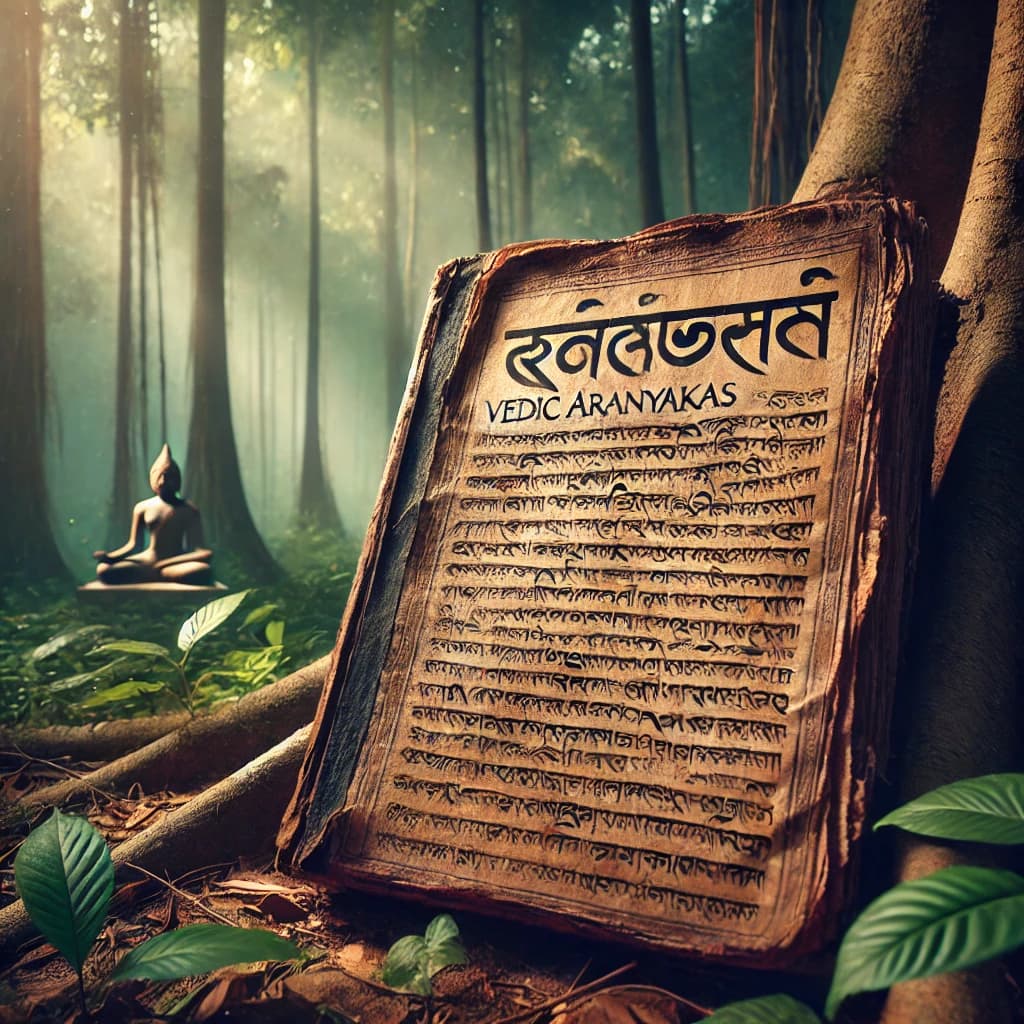
Aranyakas (Forest Texts) – Philosophical Reflections
- Transition between rituals and philosophy.
- Composed by sages who retreated into forests for meditation.
- Focuses on symbolism and inner meaning of rituals.
Upanishads (Philosophical and Spiritual Wisdom) – Highest Knowledge
- The essence of Vedic thought, focusing on Brahman (Ultimate Reality) and Atman (Self/Soul).
- Explores deep philosophical questions like the nature of existence and liberation (moksha).
- Example: Mandukya Upanishad, Chandogya Upanishad, Brihadaranyaka Upanishad.