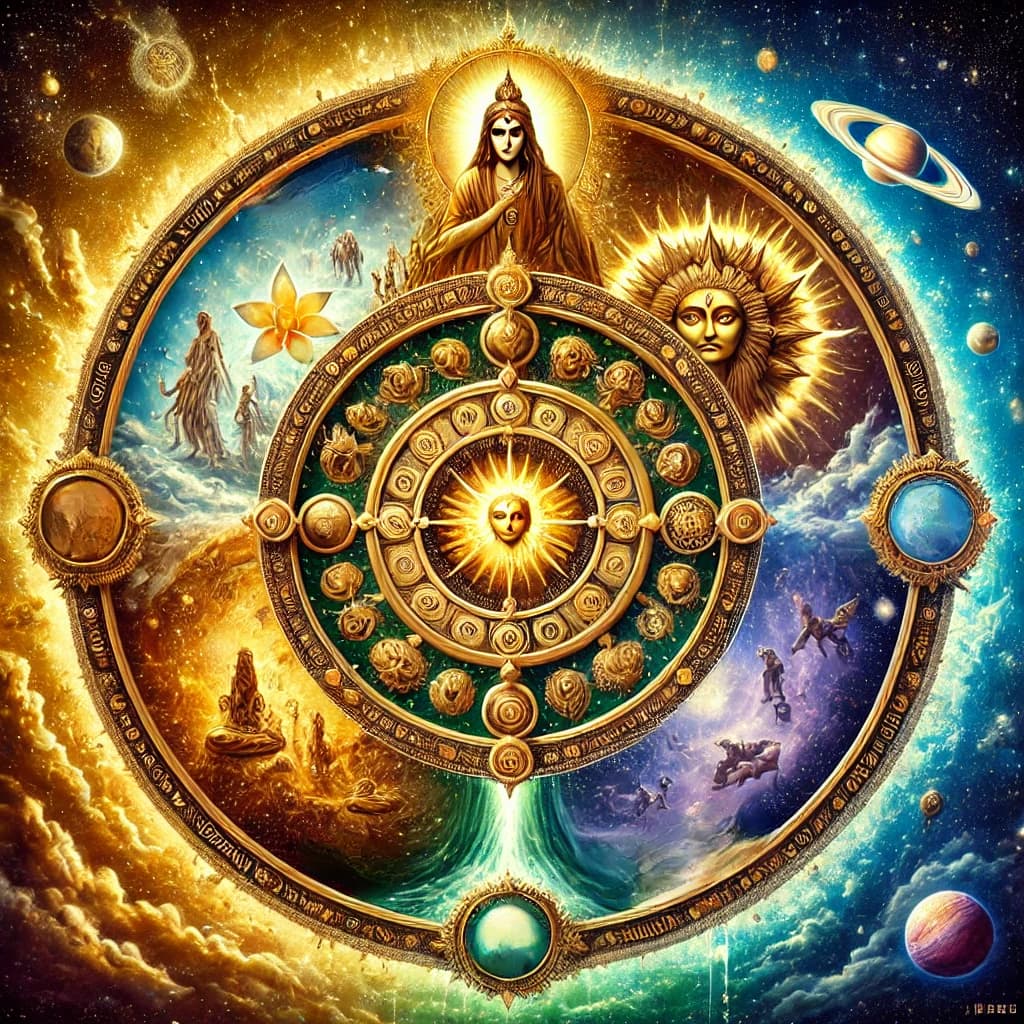
The Yugas describe the cyclical nature of time in Hindu cosmology, where human civilization rises and falls in spiritual consciousness, morality, and wisdom. This concept is rooted in the Vedas, Puranas, and Itihasas (Ramayana & Mahabharata) and is a fundamental part of Sanatana Dharma (Hindu philosophy).
Unlike the linear view of history in modern thought, where time moves from primitive to advanced civilizations, the Yuga Cycle suggests that time moves in a grand repeating loop, with ages of enlightenment followed by ages of darkness.
The four Yugas together form a Maha Yuga, which lasts 4.32 million years.
1,000 Maha Yugas make a Kalpa (Brahma’s Day = 4.32 billion years).
After every Kalpa, the universe dissolves (Pralaya), and the cycle begins again.
This cosmic rhythm is like a breath of the universe, expanding and contracting endlessly.
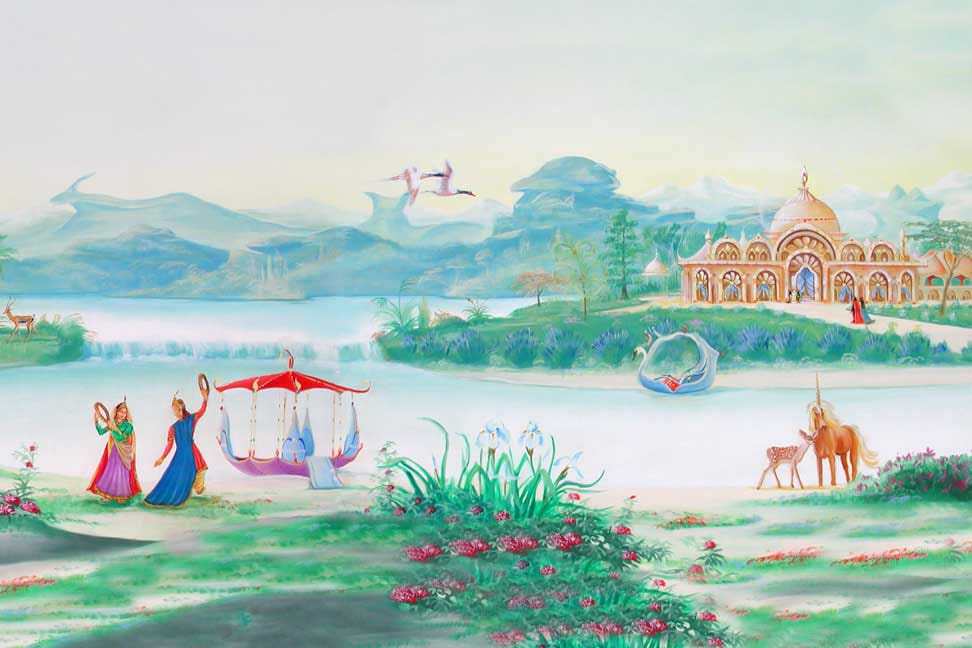
Satya Yuga (also called Krita Yuga) is the first and most glorious era in the Yuga Cycle. It is known as the Golden Age, a time when Dharma (righteousness) is at its peak, human consciousness is pure, and divine wisdom is naturally understood.
This Yuga represents spiritual perfection, peace, and a world free from suffering. Unlike the present Kali Yuga, where ignorance and materialism dominate, Satya Yuga is an era of enlightenment, simplicity, and unity with the Divine.
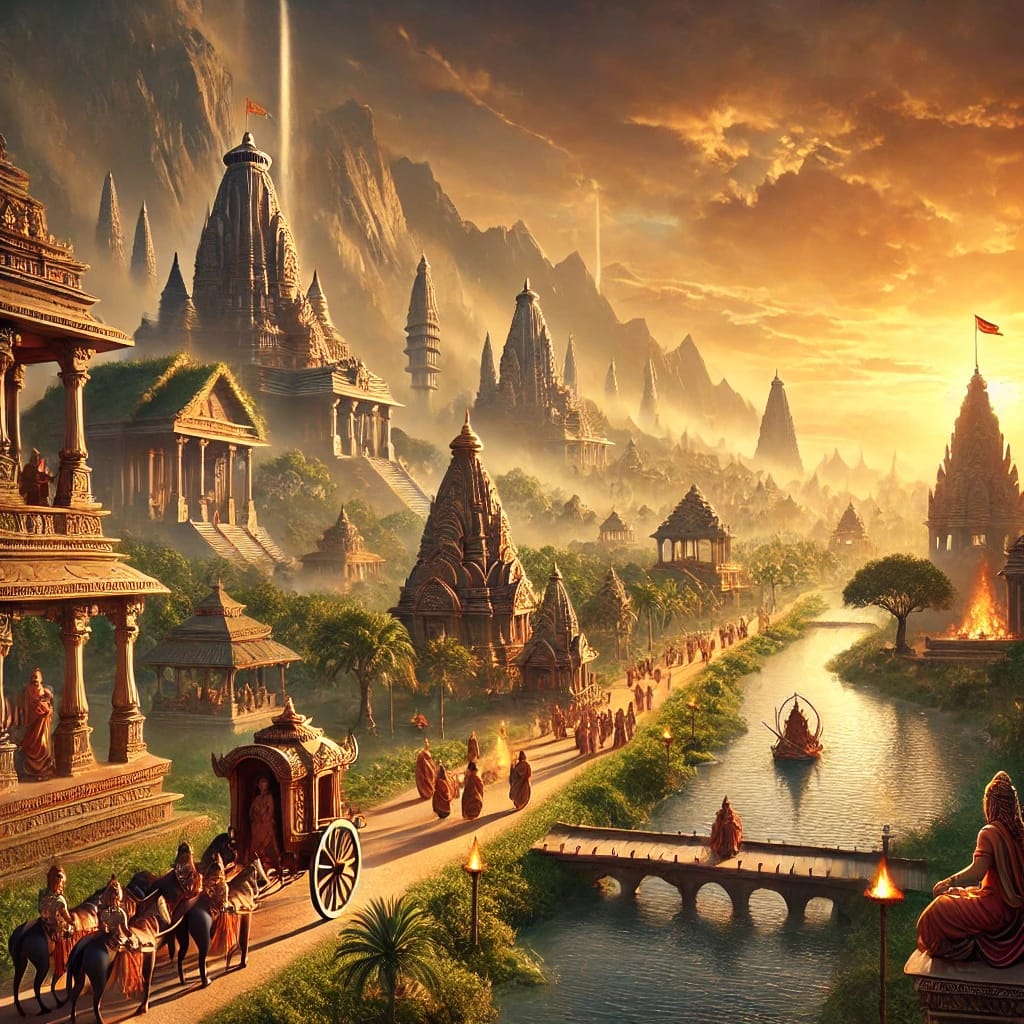
Treta Yuga is the second of the four Yugas in the Vedic time cycle, following Satya Yuga and preceding Dvapara Yuga. It is characterized by a gradual decline in righteousness (Dharma) compared to Satya Yuga, but virtue and truthfulness still dominate. The name Treta (meaning "three") signifies that three parts of Dharma remain intact, while one part is lost.
People are still largely virtuous but begin to show ego, ambition, and material desires. Sacrifices (Yajnas) and rituals become a primary way to attain divine blessings. The caste system becomes more structured, with Kshatriyas (warriors) rising in power. Advanced technology and divine weapons (Astras) are prevalent, especially among rulers and sages.
Lord Vishnu’s Avatars: Vamana Avatar: Vishnu incarnates as a dwarf Brahmin to subdue the demon king Bali. Parashurama Avatar: Vishnu takes the form of a warrior sage to eliminate corrupt Kshatriya rulers. Rama Avatar: The most famous event of Treta Yuga is the Ramayana, where Lord Rama defeats Ravana, the ten-headed demon king of Lanka.
As Treta Yuga progresses, corruption among rulers and conflicts between Brahmins and Kshatriyas increase, leading to further moral decline. This sets the stage for Dvapara Yuga, where Dharma falls further to 50%, and greed, wars, and deception become more widespread.
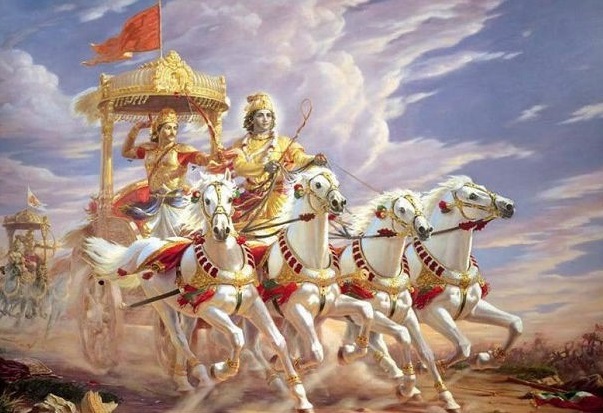
Dvapara Yuga is the third of the four Yugas in Hindu cosmology, following Treta Yuga and preceding Kali Yuga. It is marked by a further decline in righteousness (Dharma) and an increase in conflict, deception, and material desires. However, it is also an age of great heroes, epic battles, and divine interventions. Dvapara Yuga is one of the most dynamic and eventful Yugas, filled with divine play (Leela), epic battles, and spiritual teachings that remain relevant even in modern times.
Wars and conflicts become more frequent as greed, power struggles, and ego dominate society. Kings still follow Dharma, but corruption and deception increase, especially among rulers and Brahmins. People become more materialistic, relying more on rituals than true spiritual realization. Knowledge of the Vedas begins to fade, and sectarian divisions arise within society.
Vishnu incarnates as Sri Krishna, the most significant divine figure of this Yuga, guiding humanity towards righteousness. Krishna plays a pivotal role in the Mahabharata, which is the defining event of Dvapara Yuga. He delivers the Bhagavad Gita to Arjuna, teaching the path of Dharma, Karma, and devotion (Bhakti Yoga).
A colossal war fought between the Pandavas and Kauravas, symbolizing the struggle between Dharma and Adharma. The war marks the transition from Dvapara Yuga to Kali Yuga, with Krishna’s departure signaling the end of this era.
As Dvapara Yuga ends, moral decay accelerates, and Dharma drops to 25% in Kali Yuga. The death of Krishna (Moksha at Prabhas Patan) marks the official start of Kali Yuga. The spiritual connection weakens, and materialism dominates, leading to the current age of ignorance, conflict, and decline of righteousness.
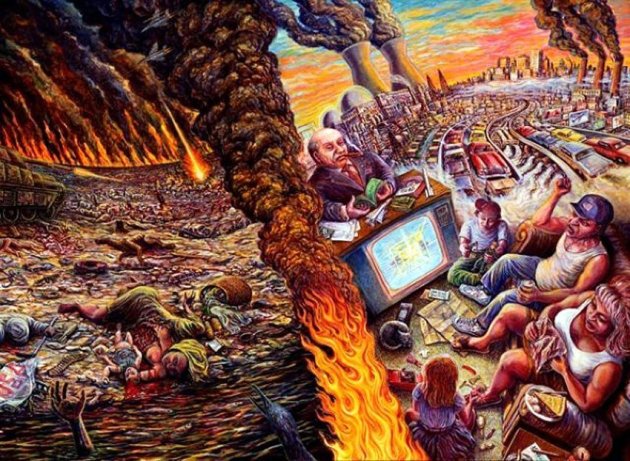
Kali Yuga is the fourth and final Yuga in the cycle of time, following Dvapara Yuga. It is known as the Age of Darkness and Ignorance, where righteousness (Dharma) declines to its lowest point, and materialism, corruption, and chaos dominate society. Kali Yuga is considered the most difficult time for spiritual growth, yet it is also said to be the easiest time to attain Moksha (liberation) through devotion (Bhakti) and sincere spiritual practice.
Spiritual ignorance spreads, and people become more focused on material wealth, power, and personal gain rather than inner wisdom. Deception, greed, and hypocrisy replace truth and morality. The caste system becomes corrupt, losing its original spiritual and merit-based foundation. Natural disasters, wars, and widespread diseases become common. Destruction of nature and imbalance in the environment increase as people prioritize selfish desires over harmony with the Earth. True devotion and spirituality survive in small pockets, but most religious practices become superficial or manipulated for power.
The Death of Krishna: The official beginning of Kali Yuga was marked by Lord Krishna’s departure from the world, leading to a complete breakdown of Dharma. The Decline of Knowledge: The wisdom of the Vedas and ancient sciences is largely forgotten or misinterpreted. Kalki Avatar’s Prophecy: Lord Vishnu’s final avatar, Kalki, is prophesied to appear at the end of Kali Yuga riding a white horse with a blazing sword. He will destroy the forces of Adharma (unrighteousness) and reset the cosmic cycle, bringing back Satya Yuga (the Golden Age).
The final phase of Kali Yuga will be marked by extreme chaos, global conflicts, and a complete breakdown of moral order. After Kalki’s arrival and destruction of evil, the world will be purified, and Satya Yuga will begin again, restoring peace and Dharma.